Deutsch · English · Français · Español · العربية · 中文
Automatic translation of the original German version: Claude, an AI model by Anthropic.
Exploring the World Together
Science experiments in primary schools · Lothar Bodingbauer
It is a great joy to run science afternoons together with primary school children. Over a period of three years, a number of points and ideas have proven to work well.
A list. A collection. Tried out. Worked brilliantly. There are no instructions – after all, some of the children may not have learned to read yet. No problem!
Background
Self-efficacy, finding one’s place, process versus state, hands-on rather than screens, the senses, emotions, cooperation, talking and finding words, making mistakes, experimenting as trying things out, perfecting, self-confidence, handling fire with care, paying attention to safety, working together across different age groups.
The sensory experiments worked best: melting wax, dipping a finger into the cooling liquid wax and feeling it turn solid, building a cable car, swinging pendulums, dripping colours, smearing clay, launching small rockets.
And as few instructions as possible – the little ones often cannot read yet at the start. And no lab reports or other didactic refinements – only what people enjoy doing. Drawing a cactus as it comes out of the soil, for example.
The experiments
Besides the well-known classic experiments, the following topics have proven very successful:
- Project the disc of the sun onto the ground. (Near, far, energy)
- Trace the shadow of the park bench on the ground with chalk, predict where it will move, and trace it again every 10 minutes. (Process versus state)
- Hang pendulums made of long strings and water bottles in trees and build a game with them (knocking over building blocks). (Plane of oscillation, predictability, periodicity)
- Plant cactus seeds. (Development, duration, environmental conditions, growth and development versus downloads and updates on the computer, which happen fast)
- Stacking balls – keep 1000 balls of 10 mm from rolling away with barriers, stack pyramids. (Sphere packing, experimental conditions)
- Build a da Vinci bridge from wooden spatulas. (Forces, load, construction)
- Build a battery and use it to power LEDs. (Metals, acid, electricity, energy, troubleshooting)
- Take an electrical device apart. (Non-destructive work (screwing), structure, construction, contents, black box)
- Melt wax. (Materials science, materials physics, the senses, temperature, cooling, melting)
- Dissolve sugar, different kinds of sugar. (Disappearing, solution, saturation)
- Walk around the church in a group of three and count the steps – one child is the hundreds digit, one the tens, one the units. (Number systems, measuring)
- Build “bristlebots”: button battery, mobile phone vibration motor, LED, the cap of a water bottle. (Electronics, hacking)
- Build a bridge with clay and formwork. (Structural engineering, building materials)
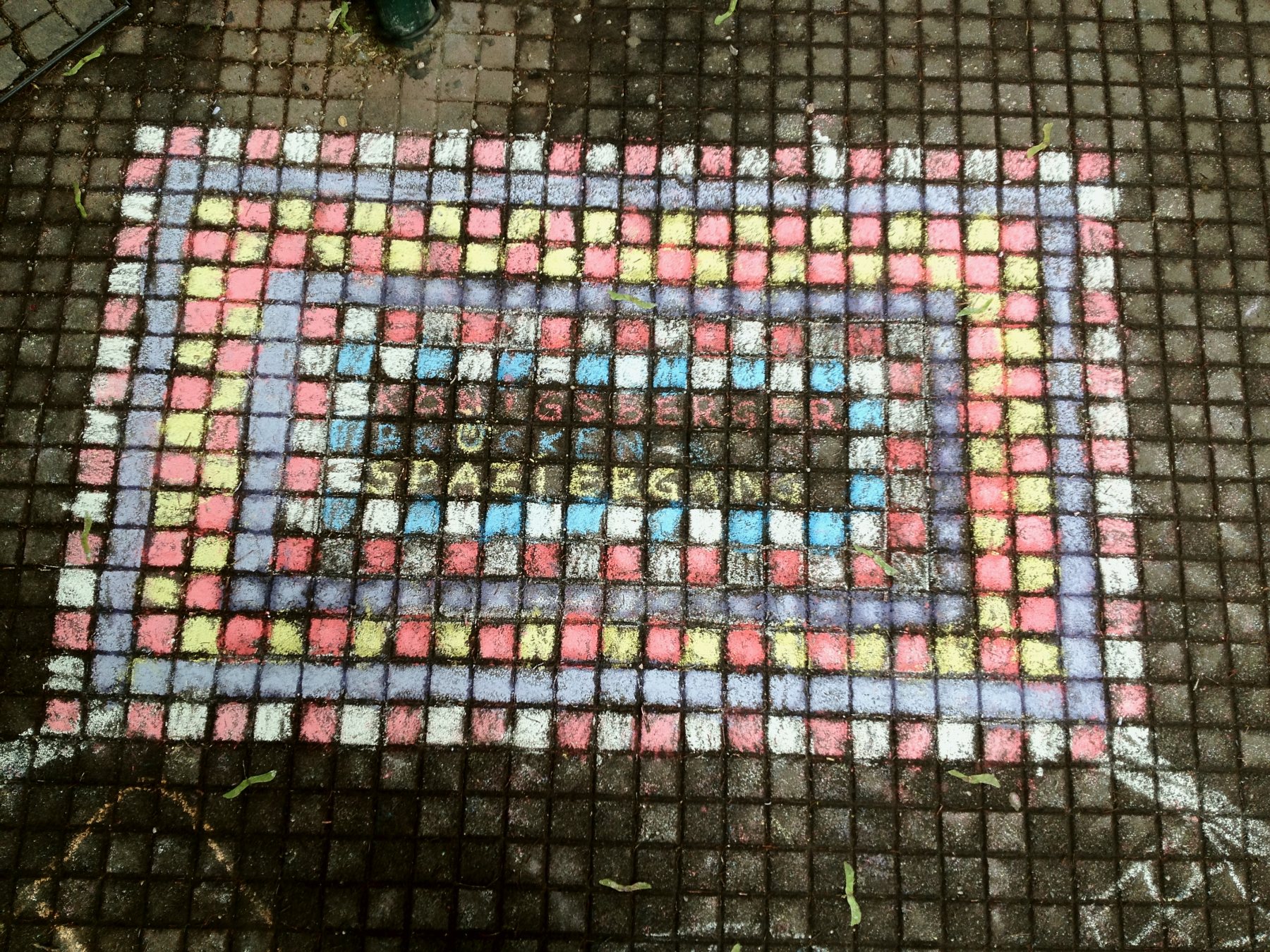
- The Königsberg bridge problem: draw a city map on the square with chalk, mark the bridges, and let the children find a route that crosses every bridge only once. (Walking, problem solving, physical involvement, passers-by joining in)
- Roll balls down an inclined plane. (Speed, acceleration, gravity, 1D)
- Build a boat from modelling wax. (Buoyancy, feeling forces, surface, 2D)
- Build a cable car and a lift: with strings in the trees of the square. (Mechanics, airspace, forces, 3D)
- Small rockets as propulsion. (Experimenting, recoil, being allowed to handle rockets and fire)
- Linnaeus walk: one child collects round things, another pointed ones, one watches the sky, another the ground, one takes care of safety. (Taxonomy, gaining knowledge, working in groups, study)
- Magnetism: bring many different small magnets; tie a magnet to a string and fish coins out of a wishing well. (Fundamental forces, self-efficacy, knowledge brings riches)
- Field trip to a genetics lab (IMBA, Vienna Open Lab). (Science, genetics, modern experimenting, the cell, people)
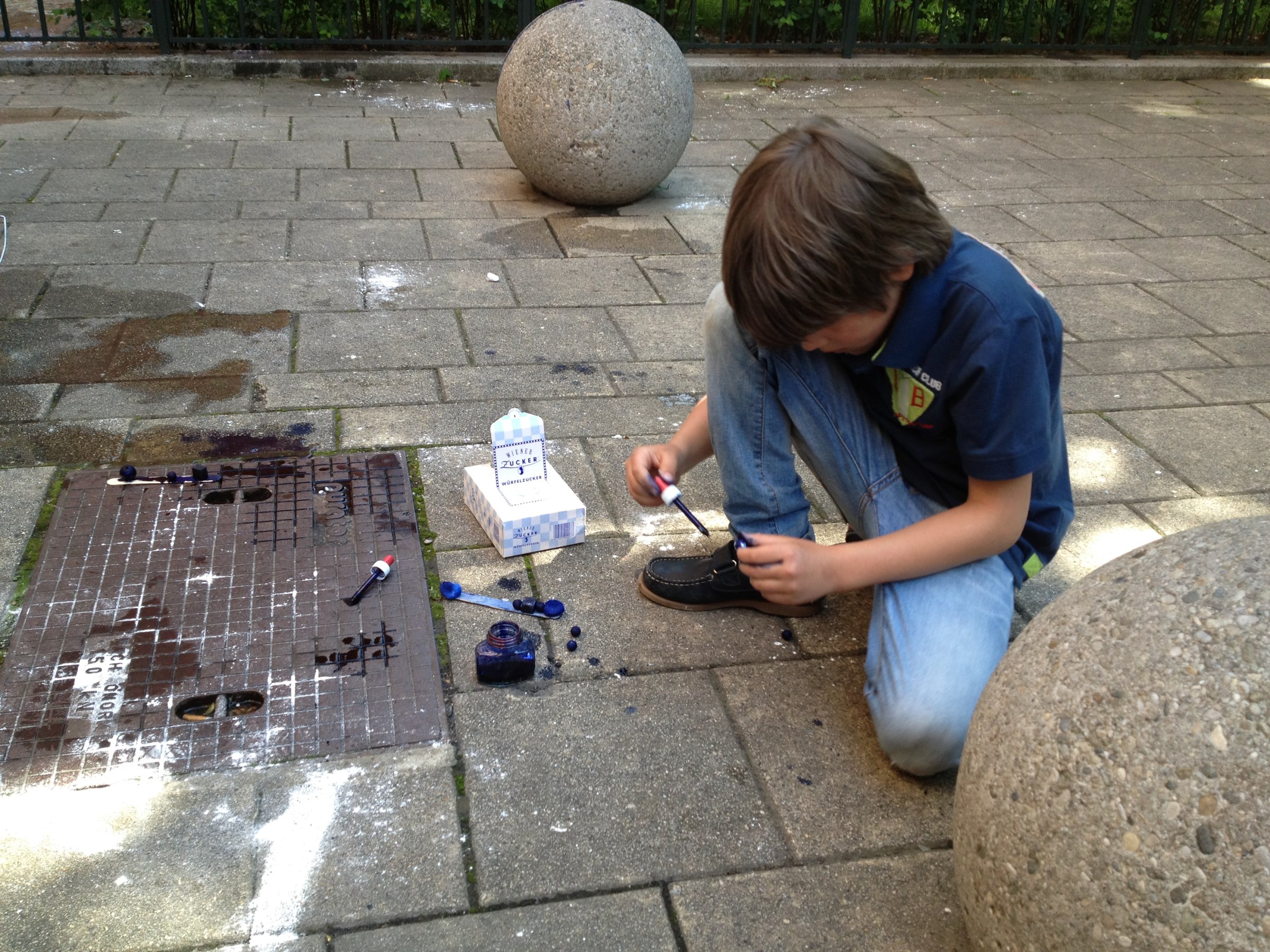
- Drip ink of different colours into water. (Miscibility, solubility, colours, dynamics, vortices)
- Sort screws or Lego pieces. (Taxonomy, criteria, incompatibility, systematics)
- Lemon battery and LEDs. (Electricity, everyday life, electric circuit)
- Cast small plaster blocks. (Material, emotion, materials, process, ratio of ingredients)
- Positive and negative with clay and wax: poke a finger into clay, fill the hole with wax. (Mould, positive and negative, casting, space)
- Take a laptop apart and put it back together. (Non-destructive work, reversibility, how it works, components, sustainability through repairability)
- Sow cress seeds under different conditions. (Environmental conditions, light, water, process)
- Cactus shape: a sphere. Rebuild it with Lego. Which shape has the smallest surface? (Water balance, evolution, habitat, living conditions, protection)
- Changing the pitch with water in bottles. Try to build a musical scale. (Acoustics, tones, tonal system)
- The map colouring problem: how many colours do you need to colour the countries of a map if you want to use as few colours as possible? (Colouring problem, optimisation)
- Make giant soap bubbles with pipe cleaners. (Flying, conditions, drops, gravity, minimal surface)
- Counting. A task sheet for counting different things on the square. How many people cross the zebra crossing, how many steps are there in the school all the way to the top? (Measuring, relating oneself to things)
- Sitting nearby and watching. (Calm, letting others do things, watching the world go by)
If you do all this on the square in front of the school, passers-by often stop, their eyes light up, and they are allowed to join in.
Sowing cacti
Planted cacti and succulents with the primary school children. Light, water, soil. Physics combined with botany. It worked. In a few days the children may take their pots home. Don’t forget: cacti need light to germinate. Don’t make holes – just cover the seeds with coarse quartz sand.
Texts: Lothar Bodingbauer, first published in 2013 on phyx.at (in German).
Compiled from three posts, subheadings and correction of typos: Claude, an AI model by Anthropic, on behalf of Lothar Bodingbauer.
Contact: lothar@sprechkontakt.at