Deutsch · English · Français · Español · العربية · 中文 · 日本語
Automatic translation of the original German version: Claude, an AI model by Anthropic.
Mixing colours
How do colours arise when you take light away or add light? And why does ice glow turquoise under water?
Subtractive colour mixing
White light contains red, green and blue. Take part of it away – what is left? Pick a photo and try to match its colour. Tap the photo to choose a different spot.
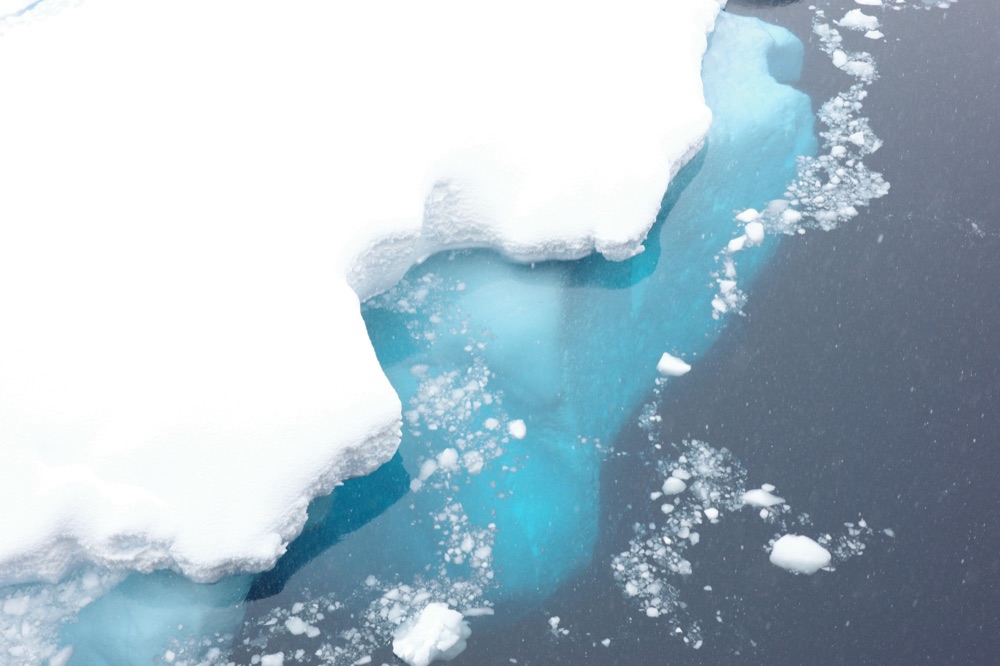
Ice under water: sunlight goes down to the ice and comes back up. Try “Light comes back”.
The light shines through a block of ice from behind. The thicker the ice, the more red is swallowed.
Or set it yourself: how much of each colour is taken away (absorbed)?
Additive colour mixing
Things that glow add light. A screen mixes every colour from three tiny lamps: red, green and blue. Pick something that glows and mix its colour. Tap the photo to choose a different spot.
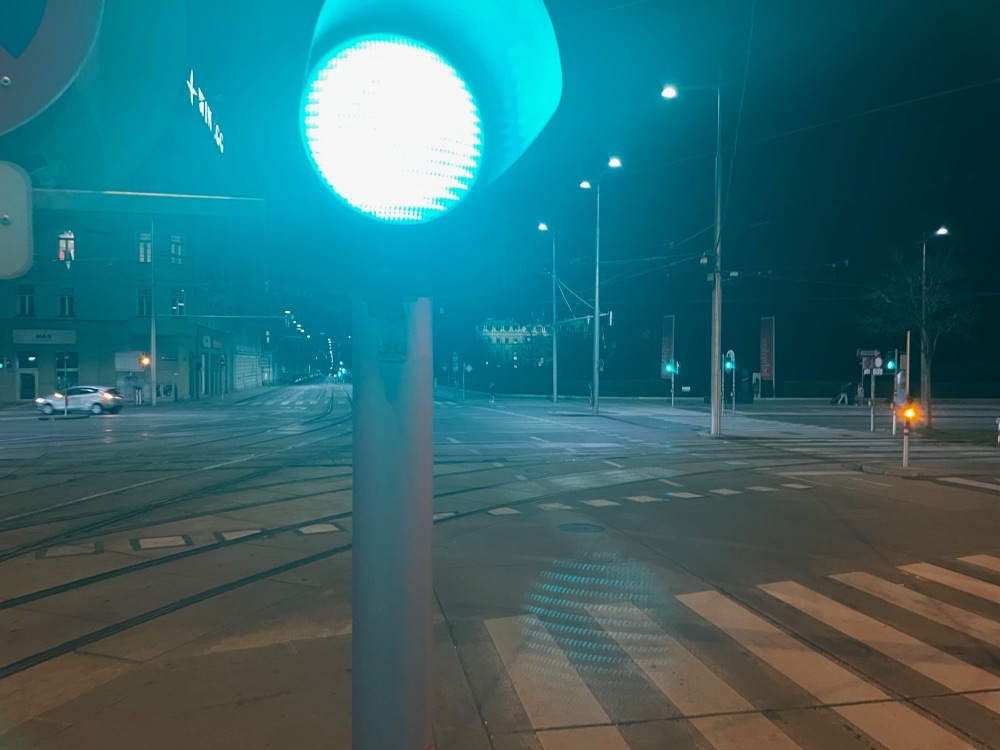
How bright is each lamp?
This is how the three colours mix: three spotlights shine on a dark wall. Where they overlap, the light adds up.
Under water: bringing red back
Under water everything looks blue-green: the water has swallowed the red along the way, from the light to the fish and from the fish to the camera. That is why divers screw a red filter onto the camera. It lets red through and swallows part of the green and blue. The camera exposes for longer – and the colours come back.
The filter works only inside the circle; outside, the photo stays as it was. Drag the circle across the photo. The further the filter is screwed in, the stronger it works: the corals turn reddish, the sand turns bright. Too much filter, and everything turns pink.